For All the Women Who´ve Been Told to Fear their Own Biology
Most of us have lived our entire lives without understanding the real power of our hormones. We learned the basics — cycles, contraception, pregnancy. Enough to manage the logistics. But no one taught us how much of who we are each day is shaped by these chemical signals moving through our body and brain.
The days when everything feels possible.
The days when getting out of bed feels impossible.
The days when everything feels heavier or strangely effortless.
The days when hunger spikes, or patience thins, or confidence drops.
The shifts in focus, motivation, resilience, mood.
How your inner world changes even when nothing around you has.
This is your biology speaking.
Most of us never learned to even consider that the way we think and feel — the “us” we bring into the world — is profoundly shaped by hormones. Who knew so much of your inner experience is chemistry, not character?
So we adapt. We compensate. We make up explanations that fit the tiny slice of information we were given. We rarely connect how we feel to our hormones, not because we’re inattentive, but because no one told us they mattered for anything beyond reproduction.
Then you reach your forties, or edge toward them, and the familiar “you” starts to feel different. Not dramatic at first — just different.
A different kind of tired.
A different kind of stress.
A different kind of body.
A different kind of sadness.
A different kind of anger.
A different kind of “not quite myself.”
This is the moment the knowledge gap becomes undeniable. If you never learned the role your hormones play beyond making babies, you cannot possibly recognize what’s happening now.
Instead of seeing the hormonal roots of your symptoms, you turn inward:
Why can’t I focus?
Why is my skin so dry?
Why am I anxious?
Why am I waking at 3 a.m.?
Why has my sex drive disappeared?
Why do I feel different?
What changed in me?
You try to make sense of it with limited information and end up struggling in silence because no one prepared you for any of this.
And then comes the part most women never expect: doctors were not taught this either. Their education stopped at periods and reproduction — the same narrow chapter we received.

“Who knew that so much of your inner experience is chemistry, not character?”
The truth is simple: you cannot understand what you were never taught. Women feel something shifting inside, but without context, the narrative collapses into self-blame or self-doubt. And when the people you turn to for help lack the training to recognize these patterns, their answers do not match your reality. Not because they don’t care, but because they were not prepared to recognize what you’re describing.
So you end up caught between what you’re living and what you’re being told, trying to reconcile a change that is reshaping your daily life.
All of this unfolds inside a culture that expects women to absorb discomfort as part of being female, to cope, push through, and endure. Feeling off, flat, overwhelmed, or unlike yourself becomes something you’re expected to quietly tolerate. And as you move through adulthood, you hear the same message again and again: this is just what happens. Calling it “normal” doesn’t make it any less real. And wanting clarity or support is natural, not a failing.
So when things shift in midlife, you don’t question the narrative — you question yourself. You call it stress, aging, or “just how it is now.” You keep going, even when your body and brain are asking for something different.
This is where many women don’t realize support exists. Not more willpower. Not “getting used to it.” Not coping better. Actual hormonal support — the kind that stabilizes the systems that are shifting.
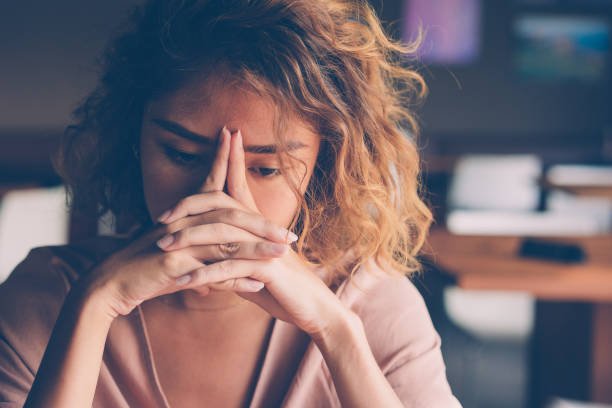
“..is exactly why hormone therapy remains underutilized today, despite being the most effective treatment for perimenopause symptoms.”
Hormones became a “dirty word” because we inherited a culture that never knew what to do with female biology — a culture that framed our internal shifts as instability instead of information. And once that lens is set, it becomes easy to downplay whatever women experience, as if discomfort is simply part of our design.
That misunderstanding shows up in medicine too. Hormones are just as poorly understood as the women struggling with them. And this narrative shapes not only how women feel, but the care we receive. It teaches us to endure rather than inquire, and it fractures trust in systems meant to support our health.
When there’s no real framework for understanding hormones, uncertainty fills the void — and doctors who were never trained in female hormone health pass that uncertainty straight back to women. Not because the science is unclear, but because their education was. That is how hormone therapy ended up with a reputation it never earned.
Hormone therapy didn’t become controversial because of women’s experiences. It became controversial because the people we trusted for guidance were never given the information to make sense of it. That gap in education is exactly why hormone therapy remains underutilized today, despite being the most effective treatment for perimenopause symptoms.
Underneath all of this is one basic truth: you cannot trust what you were never taught to understand. And most women were never taught to understand their hormones. So of course they were told to fear the therapy designed to support them and help them feel like themselves again.
But I want you to hear the real story: your hormones are a source of information, stability, and vitality. My hope is that you begin to see them for what they’ve always been — powerful, essential, unmistakably YOU.